
Okay, so check this out—I’ve been poking around Solana explorers for years, and somethin’ about the UX on some of them just bugs me. Wow! The charts are flashy, but the real value lives in quick answers and clean traces. Initially I thought a single dashboard would be enough, but then realized that depth matters when transactions get weird. On one hand it’s easy to say “use any explorer,” though actually, the differences matter a lot under load.
Whoa! I remember the first time I chased a failed transaction at 2 a.m.—felt like debugging a car with no headlights. Short info is great. Medium detail saves hours. Long-form traceability prevents panic when clusters act up, especially during big drops or mints.
My instinct said to trust the obvious players. Hmm… then patterns emerged in the data that changed my mind. Initially I thought more RPC logs would be the fix, but then realized that better UI and filter logic can reveal the same truth faster. Actually, wait—let me rephrase that: the best explorers combine raw data access with thoughtful filters and a search that doesn’t punish you for fuzzy memory. Big networks need both speed and clarity.
Here’s what bugs me about some analytics tools: they focus on bells and whistles instead of the basics. Seriously? Slow loading pages during peak volume are a real problem. Quick transaction decoding is more valuable than 12 different chart themes. It’s a small thing, but when you’re debugging a token transfer or trying to spot a rug-pull, seconds count…
On Solana, token flows move at the speed of light compared to older chains. Short delays cascade into confusion. For dev teams in New York or the Valley, that means lost time and strained Slack threads. I’m biased, but a fast, reliable explorer is part of engineering hygiene. If you disagree, fine—but try tracing a multisig failure at 3 p.m. without one.
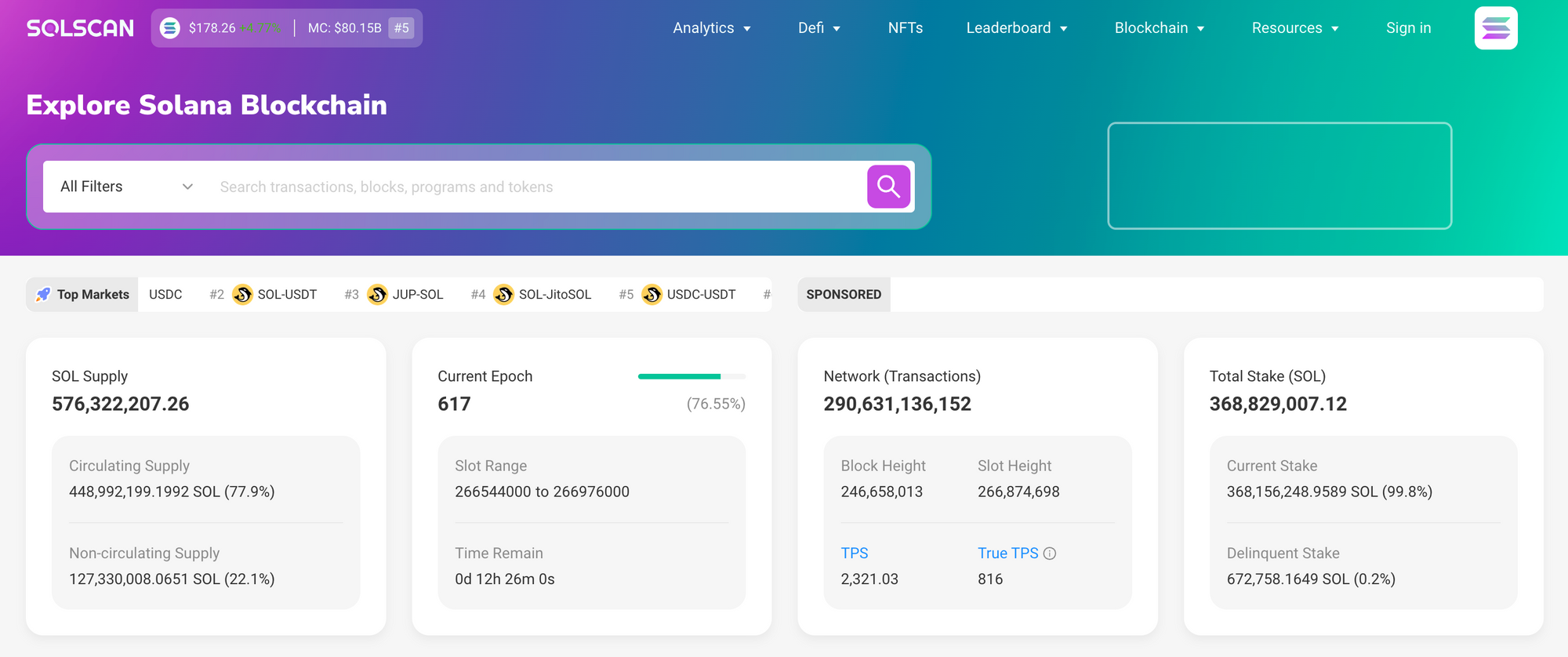
What makes solscan stand out
I use solscan mostly because it balances quick answers with deep dives. Wow! The UI surfaces the key bits first: program ID, signatures, logs. The detailed traces show how SPL tokens actually move between accounts and contracts, and those visual helpers matter when you’re under time pressure. On the other hand it doesn’t overload the casual user with raw hex, though you can still get every byte if you need it.
Seriously? The transaction decode is typically faster than I’ve seen elsewhere. Short sentence here. Medium-level detail follows. Long sentences help when I want the story of a transaction, like which program invoked which inner instruction and why a transfer failed because of an owner mismatch, which is the sort of thing that’d otherwise take a lot of reading and guessing.
When I began using solscan, I wanted speed, not show. My first impressions were pragmatic. Then a few “aha” moments arrived when the explorer mapped complex interactions into an understandable timeline. Initially I thought it was just pretty icons, but then realized the visual timeline reduced my cognitive load. Actually, that reduction lets teams move faster and coordinate fixes more calmly.
API access is another reason the tool stuck with me. Hmm… programmatic reads matter if you’re building monitoring or alerts. On one project we set up automated checks that looked for sudden spikes in token transfers and alerted the ops channel. That saved us from a small exploit. The alert logic used Solscan endpoints as a sanity check against our own node telemetry; redundancy is comforting.
One honest limitation: explorers can’t replace node logs or custom instrumentation. I’m not 100% sure the explorer will always have the same raw timing fidelity as your own RPC. But, in practice, the gap is small enough for most troubleshooting and analysis work. There, I said it—no perfect tool exists. Still, the trade-off between speed and absolute completeness often favors fast explorers for everyday use.
Check this out—there’s a community angle too. Users post verified token info, and that social verification has prevented more than one panic sell in channels I’ve been in. Wow! It helps when an explorer shows verified metadata instead of random garbage that looks official. For traders and builders alike, less ambiguity is a relief.
FAQ — quick answers from someone who’s used it
Is Solscan just for devs?
Not at all. Traders, auditors, and curious users find it useful. Short checks like balance lookups or NFT histories are fast. For deep protocol debugging, developers get the program traces. I’m biased, but it’s practical for both crowds.
How reliable is the data?
Generally very reliable, but like any explorer, it mirrors what the indexer and nodes provide. On rare occasions there can be indexing delays. Initially I thought these were frequent, but that turned out to be exceptional. Still, use a combination of on-chain queries and explorer endpoints for mission-critical checks.
Can I use it programmatically?
Yes. The API is useful for alerts, dashboards, and light analytics. Medium-sized teams will find the endpoints handy. Long requests with pagination exist, so design your job to be resilient to rate limits and partial responses.
Any tips for faster debugging?
Start with the signature search, then open the program logs and the inner instruction timeline. Wow! If a transfer failed, check account ownership and rent-exempt status. Use the token history view to trace value flow rather than guessing by addresses alone.
