
Okay, so check this out—I’ve spent a lot of late nights poking around Solana activity, chasing down token transfers and trying to explain weird spikes to friends. Wow! The first impressions matter: speed, clarity, and whether an explorer actually helps you solve a problem. My instinct said Solscan was worth bookmarking early on. It stuck.
Solscan isn’t just a block explorer. It’s a set of tools wrapped in a single interface: transaction decoding, token analytics, NFT tracking, program logs, and basic charts you can actually use. Seriously? Yes. It’s fast, but more importantly, it’s designed for people who want answers right away—developers, traders, on-chain sleuths, and curious users.
Here I’m going to walk through how I use Solscan day-to-day, what features matter, and a handful of practical tricks that save time. Initially I thought “block explorers are all the same,” but then realized they’re not—some expose far more useful intents and context about interactions and that makes a huge difference when you’re troubleshooting or auditing. On one hand the raw data is the same across explorers; on the other hand the way it’s surfaced changes the whole workflow.
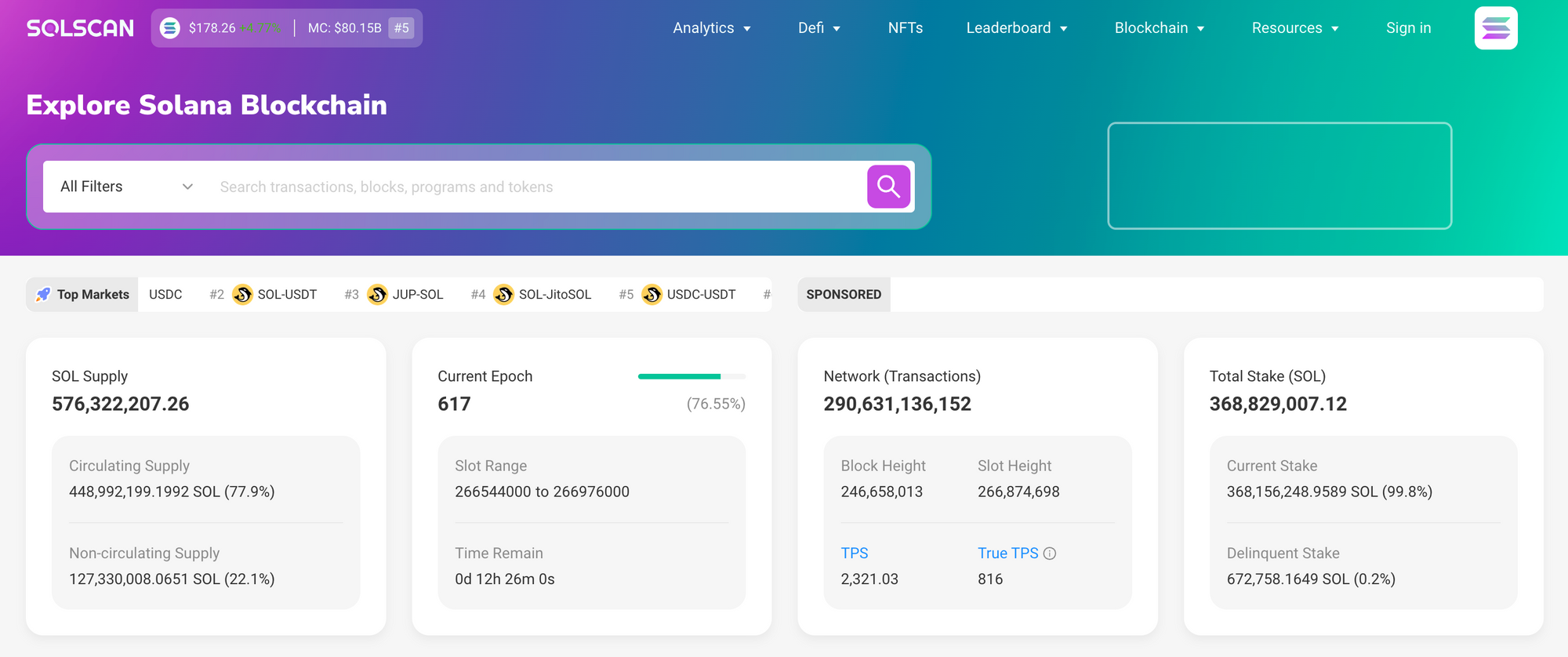
What Solscan Does Well
The basics are obvious: search by address, signature, block, or token. But here’s what separates Solscan for me. First, the transaction view decodes instructions quickly and groups token transfers neatly so you don’t have to mentally parse logs. That makes it way easier to spot multi-step swaps, cross-program invocations, or bot activity. Second, token pages give supply, holders, and holder concentration at a glance—useful if you’re checking for risky tokenomics or a whale-driven token.
Another thing: the analytics menus. Charts for daily transactions, average fees, and block times let you contextualize an anomaly. If fees spike or blocks slow, you can see the trend before you dig deeper. For developers, the program view surfaces which instructions are most invoked and shows recent interactions. That helps when you’re debugging a CPI chain or trying to confirm program state changes after a deployment.
A quick, practical tip: always cross-check an unknown token’s contract with token holders and verified metadata before interacting. If it’s brand new and most supply sits with a single address, consider that a red flag. I’m biased, but that part bugs me—too many people click ‘approve’ without checking holders. Use the explorer to look for concentrated ownership or mass transfers right after mint: those are classic rug indicators.
How I Investigate a Suspicious Transaction
Step 1: paste the signature into Solscan and load the decoded instructions. Oh, and by the way, look at the “Internal Transaction” section—some transfers get hidden in logs unless you expand them. Step 2: scan token transfer lines to see which SPL tokens moved, and cross-link each token to its page to inspect holders. Step 3: check the block time and nearby transactions to spot bot clusters or sandwich attacks. Simple, but it works.
Initially I thought you’d always need specialized tooling for attack attribution, but actually a methodical pass with a good explorer reveals a lot. On the other hand, if the transaction involves custom programs or off-chain logic, you might hit a dead end—though the program logs often give you a hint. Actually, wait—let me rephrase that: program logs aren’t comprehensive for every on-chain event, but when present they can reveal error messages or state transitions that save hours of guesswork.
Example: I once followed a failed swap where the instruction returned a subtle error code. The logs pointed to an incorrect account ordering, which told me the front-end was packaging the CPI incorrectly. That was a dev-level aha! moment, and the explorer was the bridge between the human eye and the machine’s logic.
Deeper Analytics: Token, NFT, and DeFi Pages
Token pages consolidate supply metrics, transfers, holders, and price charts when available. This is where you’d look for holder concentration, the timestamped big transfers, and top holders who might control liquidity. Medium-sized projects get a clean snapshot; for big tokens you can still filter and export snapshots for off-chain analysis.
NFT collectors will like the collection and mint pages. You can trace ownership history and see recent sales without jumping between marketplaces. If you’re tracking an airdrop, use the holder list to generate a CSV and check eligibility quickly. The CSV export is small but mighty—use it for snapshot workflows.
DeFi pages show pool activity and swaps; they’re not as feature-complete as some dedicated analytics platforms, but they’re fast for quick audits. When liquidity moves or slippage spikes, the Solscan view helps you trace the swap path and the pools touched during a multi-hop swap. That alone saves time when you want to confirm whether an arbitrage or a large liquidity pull caused a price wobble.
Developer Tools and Integrations
Developers get several pragmatic touches: program pages with verified source (if available), RPC endpoints visible for context, and instruction decoders that map bytes to known instruction names when an IDL is present. If you’re deploying an upgrade or monitoring program health, these features let you validate that state transitions happened as expected.
APIs are available for automated pulls, though I’m not including the link to docs here—just a heads up that you can script lookups. Many teams wire alerts to a webhook for large transfers or when a program sees a sudden uptick in invocations. It’s basic automation but very effective for operational monitoring.
One caveat: not all metadata is standardized across every NFT or token project. Sometimes metadata is off-chain or stored under different standards; in those cases, Solscan will show the on-chain anchor points but you may need to fetch off-chain JSON to get the full picture. That’s an occasional friction point for analytics work.
Safety, Authenticity, and Where to Click
Always verify the site you’re on. Phishing pages exist. Bookmark the official site and pause before you approve anything from an unknown front-end. I’d rather sound paranoid than sorry—this part matters. For convenience, here’s the official entry point I use: solscan explorer official site. Double-check the URL and SSL lock like you would a bank login.
Tip: when verifying a token, compare the token’s mint address across multiple explorers or the project’s official announcements. Look for verified badges on Solscan and cross-check wallet interactions. If metadata is missing or the token lacks a verified identity, be cautious. I repeat: be cautious.
FAQ
Is Solscan safe to use?
Yes, as a read-only explorer it’s safe to browse. The main risk comes from clicking links or signing transactions on third-party sites that claim integration. Always confirm the domain and avoid signing anything unless you’re certain. If an interaction requires wallet approval, double-check the exact instruction and accounts involved before you confirm.
How do I verify a token or NFT?
Search the mint address, inspect the holder distribution, view recent transfers, and look for a verified badge or a link to the project’s official metadata. Cross-reference with another reputable explorer or the project’s communications. If many tokens are in one address or the token was minted and immediately transferred to many wallets, that’s worth deeper scrutiny.
What if a transaction fails—can Solscan help?
Yes. Check the transaction logs for errors and the decoded instructions to identify which instruction failed. Often the error message points to the issue—account ordering, insufficient funds, or a program-level revert. Use nearby transactions and block context to see whether other users experienced the same issue at the same time.
Can I use Solscan for automated monitoring?
Absolutely. Solscan provides APIs and endpoints for programmatic queries. Teams often build alerts for large transfers, new mints, or spikes in program invocations. For operational monitoring, combine explorer APIs with on-chain indexers or webhooks for a reliable pipeline.
I’ll be honest: no single explorer is perfect. Some UI bits feel clunky, and occasionally metadata is missing or delayed. But the combination of decoded instructions, holder insights, and quick analytics is what keeps me coming back. Something felt off in a few early explorers I tried, and that’s why I now check Solscan first—it just answers the right questions faster.
So next time you need to vet a token, trace a transfer, or confirm a program call, open the explorer, breathe, and start with the transaction and token pages. They give you the story—often the plot twist is in the logs. Hmm… there’s always more to learn, but for now that’s how I use Solscan when the chain gets noisy and you need to make sense of it fast.
